Fill Out a Valid New Jersey 118 Template
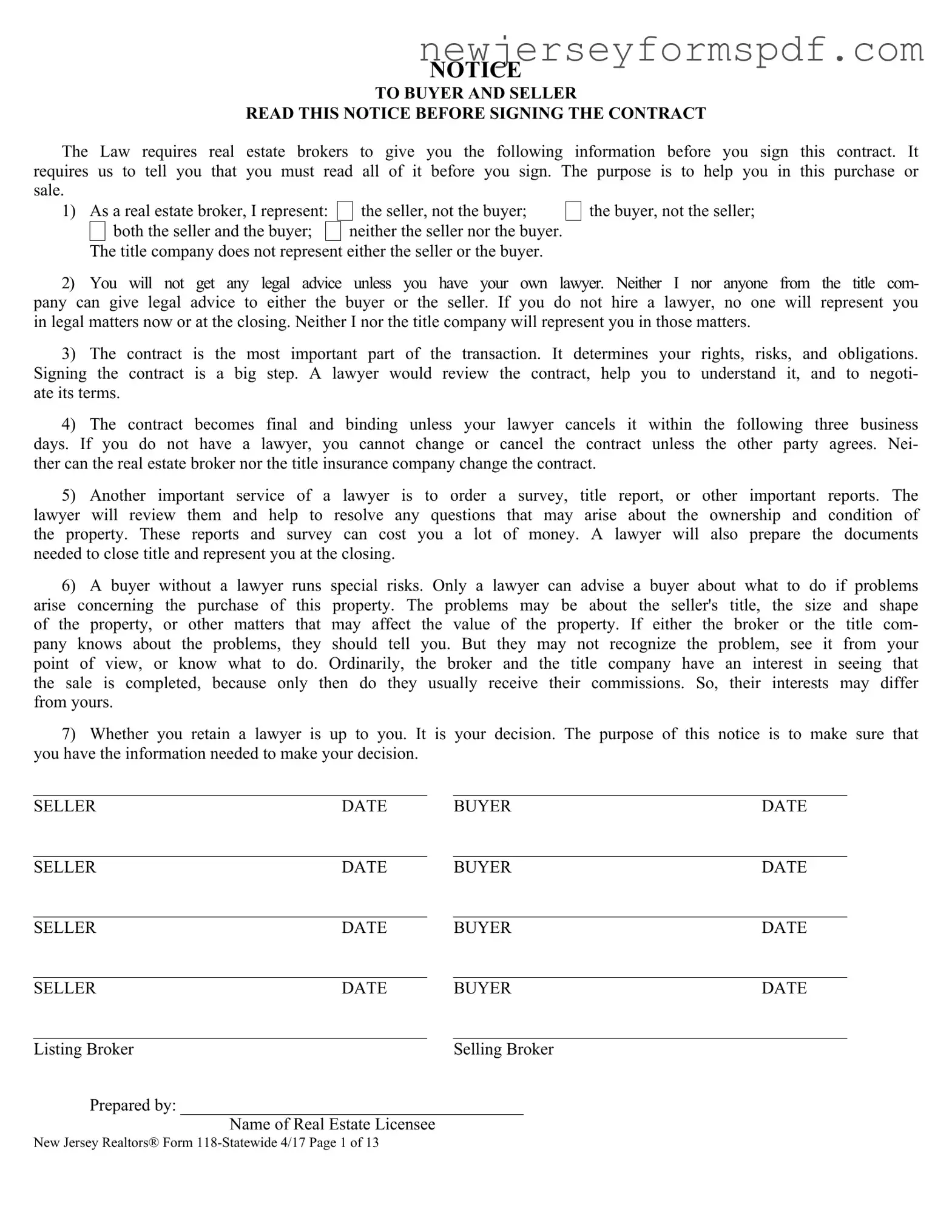
When entering the realm of real estate transactions in New Jersey, the significance of being well-informed cannot be overstated. This is particularly true for both buyers and sellers who find themselves navigating the complexities of contracts. The New Jersey 118 form plays a pivotal role in this process, serving as a legally binding contract that delineates the terms and obligations of both parties involved in the sale of one to four-family residential properties or vacant lots. It is crafted to ensure transparency and protect the interests of all stakeholders. Prior to signing such a contract, it's mandated by law for real estate brokers to provide both buyers and sellers with crucial information that aids in making informed decisions. This includes clarifying the broker's role in the transaction, underscoring the absence of legal representation unless a lawyer is engaged, and stressing the importance of understanding the contract's terms. Additionally, this form highlights the necessity of hiring a lawyer to navigate potential legal complications, order essential reports, and facilitate the closing process. With an emphasis on the inherent risks for buyers proceeding without legal counsel, the New Jersey 118 form is designed to foreground the importance of thorough review and comprehension of the contract, thereby safeguarding the financial and legal interests of the parties involved in the real estate transaction.
Sample - New Jersey 118 Form







Document Specifications
| Fact Number | Fact Description |
|---|---|
| 1 | New Jersey Realtors® Form 118 is designed specifically for the sale of one to four-family residential properties or vacant one-family lots. |
| 2 | This form is only applicable where the seller has previously executed a written listing agreement. |
| 3 | The form highlights the importance of obtaining legal advice by stating that no legal advice will be provided by real estate brokers or title companies. |
| 4 | The contract becomes final and binding within three business days unless cancelled by an attorney during the attorney review period. |
| 5 | It emphasizes the buyer's need for legal representation to understand, negotiate the terms of the contract, and review important reports and surveys. |
| 6 | Without a lawyer, buyers are warned of special risks and the potential for problems that could affect the property's value. |
| 7 | The decision to retain a lawyer is left up to the buyer, underscoring the form's aim to ensure buyers are informed. |
| 8 | Includes a comprehensive list of items included and excluded in the sale, addressing fixtures, shrubbery, and appliances. |
| 9 | Governed by New Jersey laws, including explicit mention of the option for attorney review, provisions for occupancy and possession, and requirements regarding lead-based paint for properties built prior to 1978. |
Detailed Steps for Using New Jersey 118
Filling out the New Jersey 118 form is a critical step in the process of buying or selling residential real estate in New Jersey. This document lays the groundwork for the transaction, detailing the terms of the sale, including the responsibilities of both parties. To ensure a smooth and compliant transaction, it is essential that each section is completed accurately and thoroughly. Here is a step-by-step guide to assist in filling out the form correctly.
- Start with the NOTICE TO BUYER AND SELLER section, ensuring you read this carefully as it outlines important legal information about the role of real estate brokers, the significance of having a lawyer, and the critical aspects of the contract.
- In the PARTIES AND PROPERTY DESCRIPTION section, enter the names and addresses of both the buyer(s) and seller(s), and describe the property being sold, including its address and the corresponding details on the municipal tax map.
- For the PURCHASE PRICE section, clearly state the total purchase price agreed upon, including any deposits made (initial and additional), how the balance will be paid, and details regarding mortgage financing if applicable.
- In the MANNER OF PAYMENT subsection, specify the method and schedule for the initial and additional deposits, including escrow details. If the purchase is contingent on obtaining a mortgage, fill in the relevant details concerning the mortgage application and approval process.
- Under SUFFICIENT ASSETS, affirm that the buyer has or will have the necessary assets to complete the purchase by the closing date.
- Ensure the ACCURATE DISCLOSURE OF SELLING PRICE is confirmed by both parties, acknowledging that this information will be disclosed to tax authorities.
- In ITEMS INCLUDED IN SALE, list all items that will remain with the property after the sale, highlighting any exceptions.
- Specify any ITEMS EXCLUDED FROM SALE if applicable.
- Discuss and agree upon DATES AND TIMES FOR PERFORMANCE, including key deadlines for completing the various steps of the sale process.
- The CERTIFICATE OF OCCUPANCY AND ZONING COMPLIANCE requires the seller to confirm compliance with local ordinances, including obtaining any necessary certificates at their expense.
- Address any MUNICIPAL ASSESSMENTS, ensuring the title will be free of such assessments at closing.
- Ensure QUALITY AND INSURABILITY OF TITLE are verified, detailing any easements, restrictions, or surveys that affect the property.
- Clarify the terms of POSSESSION, OCCUPANCY AND TENANCIES, including when the buyer will take possession and any arrangements with existing tenants.
- If applicable, complete the LEAD-BASED PAINT AND/OR LEAD-BASED PAINT HAZARD section, especially for homes built before 1978.
- Finally, review all entered information for accuracy before signing and dating the document. Both parties must initial each page to acknowledge their agreement to the terms.
Once the New Jersey 118 form is completed and signed, the next steps typically involve further legal and procedural actions, such as conducting home inspections, securing financing, and preparing for closing. It's important to stay in communication with your real estate agent, lawyer, and any other professionals involved to ensure all requirements are met by the specified deadlines. Completing the 118 form is a crucial step in advancing towards a successful real estate transaction.
Learn More on New Jersey 118
What is the New Jersey 118 form?
The New Jersey 118 form is a legally binding real estate sales contract specifically used in New Jersey for the transaction of one to four-family residential properties or vacant one-family lots. This form outlines the agreement between the buyer and seller regarding the terms of the sale, including the purchase price, manner of payment, and other conditions both parties must fulfill.
Who needs to sign the New Jersey 118 form?
Both the buyer(s) and seller(s) involved in the real estate transaction need to sign the New Jersey 118 form. Additionally, the form may include the initials and signatures of the listing and selling brokers to acknowledge their participation and the details of their commission.
What are the key sections of the New Jersey 118 form?
The NJ-118 form covers various crucial sections, including:
- Parties and Property Description
- Purchase Price and Manner of Payment
- Items Included and Excluded from Sale
- Dates and Times for Performance
- Certificate of Occupancy and Zoning Compliance
- Quality and Insurability of Title
- Possession, Occupancy, and Tenancies
Each section is specifically designed to ensure a transparent and mutual understanding between the buyer and seller regarding the transaction details.
What happens if the buyer or seller does not have a lawyer?
If the buyer or seller does not have a lawyer, they run the risk of not having representation during legal matters or at the closing. Neither the real estate broker nor the title company will provide legal advice. It is strongly recommended that both parties retain a lawyer to review the contract, negotiate terms, and ensure their legal rights and obligations are protected.
Is it mandatory to complete an attorney review for the NJ-118 form?
Yes, completing an attorney review is mandatory for the NJ-118 form. This review period lasts three business days after the contract is signed by both parties. During this time, the attorneys for the buyer and seller can approve, disapprove, or suggest modifications to the contract. This process ensures that both parties have their interests legally protected before the contract becomes final and binding.
What are some risks of not having a lawyer in a real estate transaction involving the NJ-118 form?
A buyer or seller without legal representation faces several risks, including:
- Lack of guidance on legal rights and obligations
- Potential overlooking of contract terms that might not be in their best interest
- Difficulties in negotiating contract terms or resolving issues that may arise, such as title problems or property inspection findings
- Inability to navigate legal complexities at closing
Having a lawyer helps to mitigate these risks by providing professional legal advice and representation throughout the transaction.
Common mistakes
Not fully understanding representation: Misunderstanding which party (buyer, seller, or both) the real estate broker represents is a common error. This confusion can lead to misguided trust and miscommunication.
Foregoing legal advice: Many individuals neglect to secure their own legal representation, believing it's not necessary. This oversight can leave them vulnerable to legal issues down the line.
Overlooking contract details: Failing to thoroughly read and understand all parts of the contract before signing it is a mistake. This contract outlines critical rights, risks, and obligations that all parties must be aware of.
Ignoring the attorney review clause: Not utilizing the three-business-day period to have a lawyer review the contract can result in finalizing a binding agreement without fully grasping its terms.
Not ordering necessary reports: Some buyers skip ordering important reports like surveys or title reports. These documents can unveil issues with the property that could affect its value and the buyer’s rights.
Assuming brokers or title companies handle legal problems: Believing that the real estate broker or title company will manage legal issues related to the property is a mistake. Their main goal is to see the transaction through, not to protect the buyer or seller's legal interests.
Failing to negotiate repair responsibilities: Not clearly negotiating who is responsible for required repairs prior to closing can lead to disputes and potential financial surprises for the buyer.
Not planning for closing costs: Many individuals underestimate or do not adequately plan for the array of closing costs. Being unprepared for these expenses can cause financial strain at the closing.
When people fill out the New Jersey 118 form, they often make a handful of mistakes that can potentially delay the process or result in unnecessary complications. Understanding and avoiding these mistakes can streamline the buying or selling experience. Here are eight common ones:
Avoiding these mistakes requires careful attention to the details of the New Jersey 118 form and a proactive approach to understanding the legal and financial implications of the real estate transaction.
Documents used along the form
When navigating through the complexities of real estate transactions in New Jersey, especially when dealing with the New Jersey 118 form, it's vital to understand the accompanying documents that often play a critical role in the process. These documents not only complement the NJ 118 form but also ensure a thorough and legally sound transaction. Here, we present a concise list of documents commonly used alongside the NJ 118 form to provide a clearer understanding of what to expect and prepare for when engaging in real estate dealings.
- Addendum to the Real Estate Sales Contract: This document includes any additional terms or modifications agreed upon by the buyer and seller that weren't initially included in the original sales contract.
Understanding these documents and their significance in the real estate transaction process can empower buyers and sellers, promoting smoother transactions and informed decisions. Whether representing the seller, the buyer, or navigating a transaction independently, each document holds critical information that can protect all parties involved, legally and financially. Always consider consulting with a legal professional to ensure all documents are thoroughly reviewed and understood before proceeding with any real estate transaction.
Similar forms
The New Jersey 118 form is quite similar to a Residential Purchase Agreement, prevalent in various states across the U.S. This document serves as a binding agreement between a buyer and seller to transfer a residential property's ownership. Both outline the conditions of the sale, including purchase price, disclosures, and terms related to closing and possession. Just like the New Jersey 118 form emphasizes the critical aspect of clear mutual understanding and agreement on terms before finalizing the deal, so does a Residential Purchase Agreement in other jurisdictions, ensuring both parties are aware of their rights, obligations, and the transaction's legal implications.
Another document similar to the New Jersey 118 form is the Buyer’s Broker Agreement. This agreement outlines the relationship between a real estate agent (or broker) and the buyer. While the New Jersey 118 form details the responsibilities of real estate brokers to buyers and sellers within the transaction, making clear who represents whom, a Buyer’s Broker Agreement specifically defines the broker's duties to the buyer, compensation, and the duration of the agreement. It ensures the buyer's interests are represented in the real estate transaction, paralleling the disclosure requirements seen in the New Jersey 118 form about brokerage representation.
The Seller’s Disclosure Statement bears resemblance to the New Jersey 118 form in that it provides crucial information to the buyer before a sale is finalized. This statement includes known issues with the property’s condition, legal problems, or other material facts that could influence the buyer's decision. Similar to how the New Jersey 118 form requires disclosures about the property and transaction terms, the Seller’s Disclosure Statement aims to protect the buyer by ensuring they are fully informed about the property they are purchasing.
The Attorney Review Clause, often included in real estate contracts including the New Jersey 118 form, is another significant similarity. This provision allows the buyer and seller a specific period, typically three business days, during which their attorneys can review the contract. The purpose is to ensure that the contract terms are legally sound and in the client's best interest. If the attorneys disapprove of the contract, they can cancel it, renegotiate terms, or request amendments, offering a level of legal protection and oversight closely echoed in the New Jersey 118 form’s emphasis on legal review and advice.
Dos and Don'ts
When completing the New Jersey 118 Form, it's essential to follow specific dos and don'ts to ensure the process goes smoothly. Below are lists to help guide you through both what you should and shouldn't do.
Things You Should Do- Read the entire notice and contract before signing to understand your rights, risks, and obligations fully.
- Consider hiring a lawyer to review the contract, negotiate its terms, and represent you in legal matters.
- Ensure all the information you provide on the form is accurate and truthful.
- Pay close attention to the deadlines for deposits, mortgage applications, and other time-sensitive actions.
- Order a title insurance commitment and a survey, if necessary, to identify any potential issues with the property.
- Don't sign the contract without reading and understanding all its parts, even if pressured by a broker or seller.
- Don't proceed without legal representation, especially if you're unfamiliar with real estate transactions.
- Don't ignore the attorney review clause; use this period to have a lawyer examine and possibly cancel the contract if needed.
- Don't forget to negotiate on items included or excluded from the sale, based on the condition of the property.
- Don't overlook your right to an inspection and/or risk assessment for lead-based paint if the dwelling was built prior to 1978.
Misconceptions
There are several misconceptions surrounding the New Jersey 118 form, which is vital in real estate transactions within the state. Understanding these misconceptions is crucial for both buyers and sellers to ensure a smooth transaction process.
Misconception 1: The New Jersey 118 form is optional in real estate transactions. Reality: This form is a mandatory document that provides essential disclosures and needs to be signed by both buyer and seller in transactions involving residential properties.
Misconception 2: Signing the New Jersey 118 form binds you to the purchase or sale without the option of attorney review. Reality: The contract becomes final and binding only after the three business days’ attorney review period, during which either party can cancel or modify the contract.
Misconception 3: The form covers all aspects of the real estate transaction. Reality: While it provides a comprehensive overview, it does not replace the due diligence and separate agreements for inspections, financing, and specific contingencies.
Misconception 4: Real estate brokers or title companies can provide legal advice regarding the New Jersey 118 form. Reality: Brokers and title companies cannot provide legal advice; it's imperative to consult a lawyer for legal counsel regarding the transaction.
Misconception 5: The buyer does not need a lawyer if they agree with the terms. Reality: Regardless of agreement on terms, having a lawyer ensures protection of your legal rights and helps navigate potential issues.
Misconception 6: All disputes regarding the earnest money deposit are resolved by the brokers involved. Reality: Disputes over the deposit can lead to the funds being held in escrow until a legal resolution is reached, potentially involving court intervention.
Misconception 7: The form is only necessary if a real estate broker is involved. Reality: Even in transactions without a broker, using the New Jersey 118 form is recommended for the protections it affords both parties by ensuring all disclosures and obligations are clearly outlined.
Understanding the accurate scope and purpose of the New Jersey 118 form is essential for anyone involved in buying or selling residential property in the state. It protects both parties by ensuring all necessary legal information is disclosed and agreed upon up front.
Key takeaways
When managing the New Jersey 118 form, consider these essential takeaways:
- Understand representation: Know whether the real estate broker represents the seller, the buyer, both, or neither. The title company does not represent either party.
- Seek legal advice: Legal advice is crucial since brokers and title companies cannot provide it. Without a lawyer, you lack representation in legal matters.
- Contract importance: The contract is vital to your rights, risks, and obligations. Signature implies agreement, making it legally binding unless canceled by a lawyer within three business days.
- Lawyer's role: A lawyer orders essential reports, reviews them, handles disputes, and represents you at the closing. They play a key role in navigating through the buying or selling process safely.
- Risks without a lawyer: Not hiring a lawyer exposes you to specific risks, especially in understanding property problems or disputes that could affect the value or purchase.
- Final decision on legal representation: Deciding to retain a lawyer is your choice but is strongly advised to understand and navigate the process effectively.
Remember, these points ensure you are well-prepared and informed about the critical steps and potential risks in real estate transactions in New Jersey.
Popular PDF Documents
Nj Tax Forms 2023 - Professionals like accountants and tax preparers often assist taxpayers in filling out the NJ-BUS-1 to avoid errors that could lead to tax discrepancies.
New Jersey Tax Id Number - Exemption codes for backup withholding or FATCA reporting should only be filled if applicable.